

How To Gold Leaf A Window
Gold Leaf Techniques On Glass & How To Start
Below, I use one of my most recent projects to demonstrate the process of Reverse Glass Gilding, and after the demo I provide a listing with links to the materials you volition demand to get started.
REVERSE Glass GILDING
Step i : Clean the Glass

Before getting to piece of work, make sure the glass is free of finger prints / smudges and any lint or fuzz. Clean both sides of the glass with glass cleaner and a lint complimentary newspaper towel.
Step 2 : Create your blueprint

When you are just starting out learning the application of aureate foliage, the design you create is second in importance to learning of the process. For your offset projection, I would recommend keeping the design equally unproblematic equally you feel comfy. Possibly but a main shape, or a single letter of the alphabet. My kickoff 2 gold foliage projects were a uppercase letter 'A' and a number 'ii'. Since this is my third gold leaf project, I decided to create a limerick including a 'Lm' monogram paired with some custom Roman Capitals with Italic flare on the letter 'L'.
"Annihilation worth doing is worth doing poorly until you larn to practise it well." -Steve Brown
I've included this quote as a little reminder for anyone just outset to learn about this stuff. The simply way we tin can become meliorate and attain a stronger understanding of the gilded leaf procedure is by just starting. Start simple and in one case the procedure makes more sense, and so we can begin to create more intricate designs.
Step 3 : Create A Pounce Pattern to Transfer Blueprint to Glass with Chalk

Afterwards sketching or printing your design onto newspaper, the pounce wheel is used to create little holes around the outlines of the design. After tracing the entire design with the pounce bike on top of a cut matt or piece of paper-thin, rub the back of the paper with a fine dust sandpaper. This will open the holes yous created with the pounce wheel to let chalk to transfer through the paper and on to the glass.
Stride 4 : Fix H2o Size (water/gelatin based glue)

Water size is the "glue" that adheres gold leaf sheets to glass, and information technology needs to exist prepared fresh before each awarding of gold.
H2o Size Preparation : Get-go, accept apart the two halves of two capsules, and soak them in cold/room temp. distilled water for a couple minutes (only enough water to cover the capsules). The capsules won't deliquesce into the cold water, but you lot will observe that they increase in size and get flimsy. Now, hold the stainless steal mug over top a medium flame nigh 1" away while constantly swirling the mixture. After a couple minutes, you will find the capsules beginning to fully dissolve into the water. Cook the mixture until there are no visual remnants of the capsules. Then you can add more cold distilled h2o to the mixture to increase volume.
Stride v : Employ Gilt

Before laying down any gilt. Tape your design to the back of the glass, and utilise information technology every bit a guide to know where to utilise the gold. Notice, I take a white circle drawn. This circle was traced with a grease pencil, then the sketch was removed.
If you traced over the area with a grease pencil, make sure to flip the glass over so the grease pencil is on the contrary side from where yous will be applying the gold.
Now, Have a Water Size Brush, dip it in the Water Size (glue) and flood the area of glass where yous will exist applying the gold.
Next, create a static charge by rubbing the Gilders Tip Castor on your hair, then open up upwards your packet of golden to reveal a sheet and place the Gilders Tip Brush on height of the gold. The static charge should pick up the aureate, and now the gilded tin can exist transfered from the gilt packet to the glass.
When laying downward multiple sheets of gold, it is desirable to overlap the sheets by maybe around a quarter inch.
Step 6 : Await for Gold To Attach, And then Rub Away Excess Gold

Sometimes it takes around an hour or more than for the gold to entirely attach to the drinking glass . You'll know its ready when the gilt become shiny. When the gold is shiny, accept a cotton wool brawl and lightly castor away any loose pieces of golden. Exist aware that gold can scratch gold.So, when rubbing away the loose gold, make certain to clean off the gilded that was picked upward on the cotton wool ball before standing removal.
Once you have removed the excess gold, you may find that you missed little spots. Now y'all can repeat the procedure, laying downward extra gold in the places you missed the beginning time around. When the second gild has dried, clean abroad the actress aureate once again with a cotton wool ball. This time, you lot can add a piffling extra pressure with the cotton ball. Rubbing in a circular motion, y'all can smooth out whatsoever crude areas.
Pace vii : Transfer Design Using Pounce Blueprint and Chalk
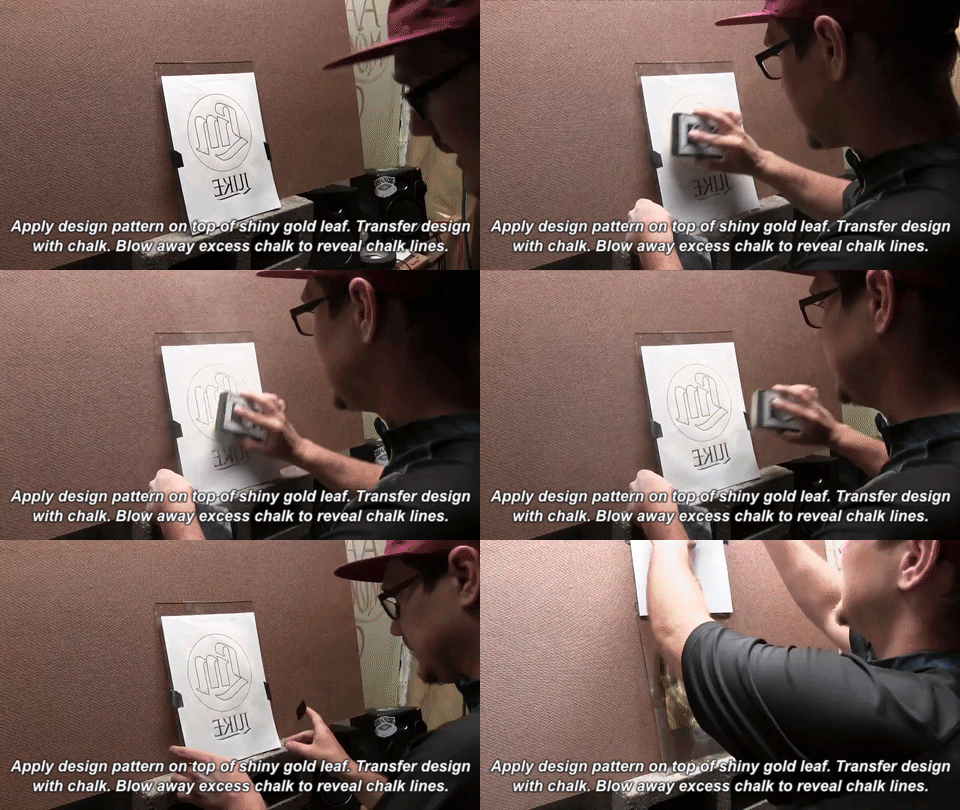
I am using a Quilt Pounce to apply the chalk, but if you're trying to save a flake of coin, I've heard that you use as well use a thick sock.
***I taped the design to the glass on the height, lesser, and sides. And when I was done chalking the design, instead of taking the whole affair off, I kept the design taped on the height. This way, I could fold and tape the pattern up and abroad from the drinking glass, and fold it back down into the same position incase I needed to re-chalk the pattern. ***
Step 8 : Paint Fill-in Blackness Overtop Gold
Stride ix : Wash Abroad Excess Gold
Pace 10 : Pigment in the background a solid color
Step 10 : Let Background Paint Dry out then Frame your Glass!

SUPPLIES
When I first started reading about gold leafage techniques, the entire process was foreign to me, as information technology might be to you. Information technology took me a while to effigy out everything that I would need to get started. And so, I figured that sharing this knowledge in a list format would be helpful to people interested in learning about gilded leaf! I've provided links for most the supplies, so if you are so inclined, you tin build upward your digital shopping cart.

Gilded Leaf Techniques by Kent H. Smith -I highly recommend picking up a copy of this book and reading through the first few sections earlier getting started. The author explains gold leaf techniques in great detail. And this is how I learned the process. Below I accept created a list of the stuff you'll demand, and the book volition assist farther explain how to utilize everything.

A Drinking glass Picture Frame -Glass frames are relatively inexpensive, and most likely you already have some lying around in your basement, or hanging on your walls. I recommend starting with a medium size frame... maybe around viii"x10". Painting tiny details on glass tin can exist hard, and so I recommend starting out with a very uncomplicated pattern. Maybe just one letter, number, or generic shape. The first couple times you try applying gold leaf to glass, its more than about learning the procedure than the final outcome of the fine art created. So, keep it simple and be patient.

Genuine / Professional Quality Gold Leaf - It'southward an expensive fashion to learn, but I think it'south important to utilize the real deal if you lot desire to gain a better understanding of how 18-carat gold works. False gold is a lot thicker, tarnishes quickly, and just doesn't human action the same way as genuine golden, so why even bother?

Gilders Tip For Loose Gilded-This Gilders Tip Brush is very thin, and is used to pick upwards and identify the flimsy gold leafage sheets onto the glass. In guild to selection up the gilded leaf sheets, it helps to charge this castor with static electricity by rubbing the beard on the hair of your head and/or arm.

Pounce Wheel,Chalk Quilt Pounce, &Cardboard/Soft Surface - The Pounce Wheel is used to perforate the outline of your design. One time yous have holes in the printed paper version of your design, use it as a pattern/stencil. The quilt pounce is a little pouch filled with chalk, and when rubbed on top of your stencil, the chalk moves through the holes of your stencil, and in consequence transfers your blueprint onto the drinking glass.

Backup Paint - Afterwards you've laid out all your gilt and it's looking good on the drinking glass, use Back up Black to preserve the gold. Back Up Blackness is a black pigment that dries hard and volition protect the gold beneath where ever information technology is painted.

Brushes and Brush Maintenance -Lettering Quills - Mineral Spirits - Brush Preserving Oil -
Mack Lettering Quills are a nice brush to work with for sign painting. Since they have long hair, they hold a lot of paint and have a large range in terms of marking making capabilities. A single brush can create a hairline using the tip of the brush, and with a bit of pressure level, tin create a much thicker line.
Mineral spirits serve ii purposes. They work to thin down paint that is too viscous, and also is used to make clean the brushes after use. When yous're done painting for the twenty-four hour period and your brushes are clean, dip them in Castor Preserving Oil to proceed them from drying out. If oil based paint dries in your brush, the castor volition be ruined and the hairs will slowly start to autumn out.
Source: http://www.raymawst.com/blog/2017/6/23/gold-leaf-techniques-on-glass-how-to-start
Posted by: hobbsfamenig.blogspot.com
0 Response to "How To Gold Leaf A Window"
Post a Comment